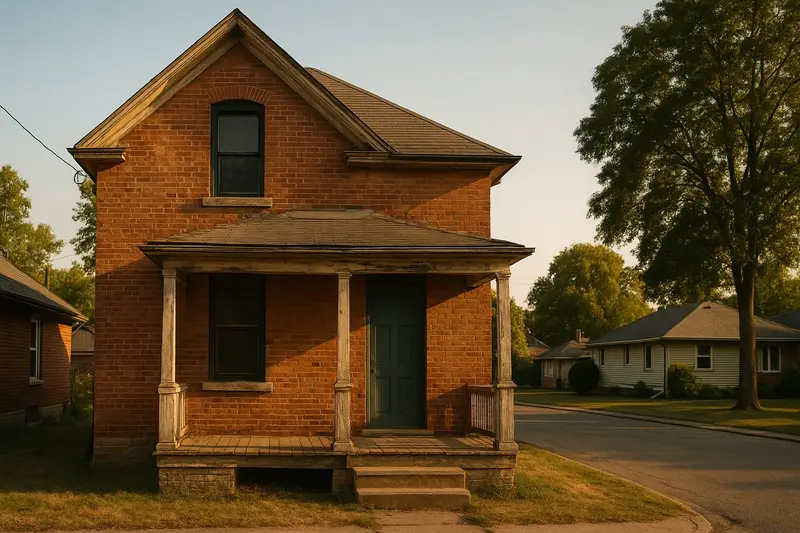
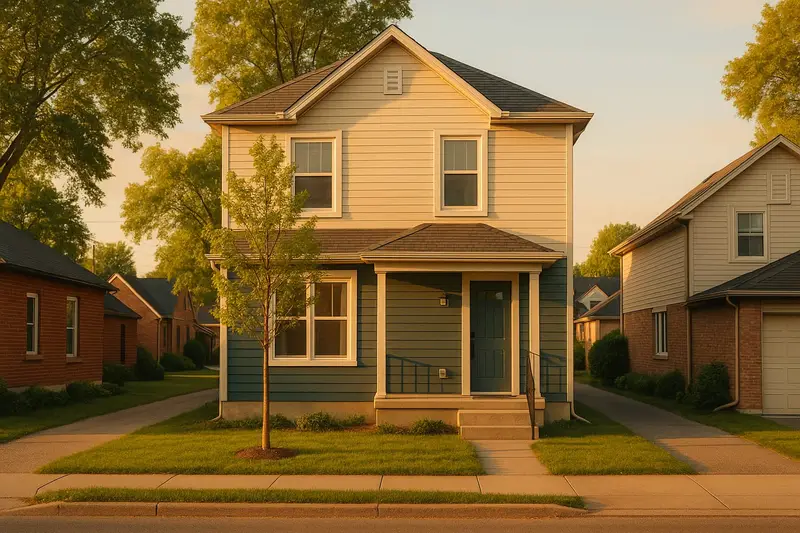
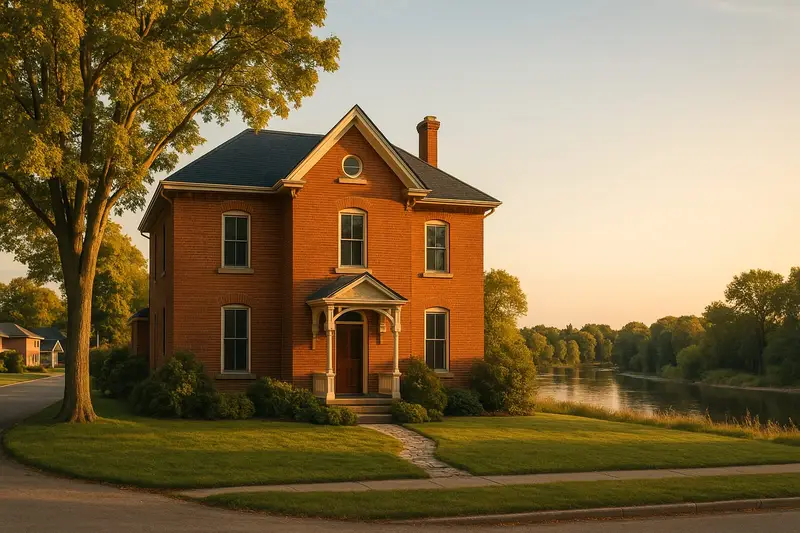
A typical 1960s Brantford detached home has between three and five issues a competent inspection will find. Each one runs $5,000–$25,000 to fix. The inspection costs $500. The math on skipping it is one of the worst trades in real estate.
Brantford has a deep stock of housing from 1900 to 1980 — character-rich, mostly affordable, structurally sound on the bones, and almost always carrying at least one expensive surprise. Here's what a real inspection on an older Brantford home actually catches, what the fixes cost, and how to spot an inspector who's just rubber-stamping the file.
Why this matters more in Brantford than most cities
About 60% of Brantford's owner-occupied housing stock predates 1980. That's much higher than newer Southern Ontario markets like KW or the GTA fringe. Whole neighbourhoods — downtown, East Ward, North Ward, Holmedale, older Echo Place, older sections of West Brant — are built almost entirely from this era.
The good news: these homes were built with real lumber, real brick, real plaster. Most are still standing for a reason. The bad news: the systems inside them — wiring, plumbing, insulation, heating — have aged out of code in specific predictable ways, and replacement is expensive.
A first-time buyer skipping the inspection on a 1955 Brantford bungalow because "the listing said it was renovated" is the single most expensive mistake I see in this market.
The five issues real inspections find
These come up over and over on pre-1980 Brantford homes. If your inspector finds zero of these, they didn't look hard enough.
1. Electrical — knob-and-tube, 60-amp service
Knob-and-tube wiring is the single biggest red flag in homes built before 1950. It looks fine — porcelain insulators on the joists in the attic, separate hot and neutral wires running through holes in the framing. It's not fine. Most insurance companies in Ontario won't write a policy on a home with active knob-and-tube. Some will write a temporary one if you commit to remediation.
Cost to fix: $8,000–$22,000 for a typical 1,400 sq ft home depending on accessibility (open walls vs. fishing through plaster).
The other electrical issue is 60-amp service. Built into homes pre-1965, undersized for modern loads (a single dedicated circuit for a kitchen plus AC and dryer maxes it out). You can't add a hot tub, EV charger, or finished basement on 60-amp.
Cost to fix: $2,500–$4,500 for a service upgrade to 200-amp. Add $4,000–$10,000 if the panel + branch wiring also needs to be brought up to code (often the case when there's also knob-and-tube).
2. Plumbing — galvanized, lead, and undersized supply
Galvanized steel water pipes were standard in Brantford from the 1900s through the 1950s. They corrode from the inside — flow drops over time, water comes out brown when you turn a faucet on after a vacation, eventually pinhole leaks happen. By 2026, a galvanized system in a 1940s home is at end-of-life.
Cost to fix: $5,000–$14,000 for a whole-house re-pipe to copper or PEX, depending on access.
Lead supply lines (the line from the city main to your house) were used through the 1940s. The City of Brantford has a partial lead service replacement program — they replace the city side; you replace the homeowner side, often a $2,500–$5,000 job. Some properties are still partially lead-lined. A good inspector will check the visible meter connection and tell you what to look for.
3. Insulation — vermiculite, missing wall insulation
If the attic insulation looks like loose grey-brown popcorn pellets, that's vermiculite. It was sold under the brand "Zonolite" through the 1980s. Up to 70% of vermiculite samples test positive for asbestos. It's safe if undisturbed but you can't just blow new insulation over it, you can't run new electrical through it without remediation, and disclosing it on a sale knocks $10K-$25K off most offers.
Cost to remediate: $4,000–$12,000 for proper abatement of a typical attic.
Missing wall insulation is silent and expensive. Pre-1960s homes often have empty wall cavities — building practice didn't include batt or blow-in. Heating bills are 30–50% higher than they should be. A retrofit (drilling holes, blowing in cellulose) runs $4,000–$9,000 for a typical bungalow.
4. Roof, structure, and water entry
Roof age is the easy part — most asphalt roofs last 18–25 years. Replacement on a typical Brantford 2,000 sq ft is $11,000–$18,000. Inspectors will tell you the visible age but rarely the remaining life with confidence.
The harder part is what a sloping floor or a crack in the basement parge means. Brantford's clay-heavy soil moves with the seasons. Most older homes have settling cracks that are cosmetic. Some have active foundation issues that need engineering work — $15K–$40K range. Distinguishing the two requires a qualified eye.
5. Heating — oil tanks, asbestos, original furnaces
Three things to check on heating:
Buried oil tanks. Some older Brantford homes still have abandoned underground oil tanks from when they ran on oil heat in the 1950s and 60s. If the tank is leaking, soil remediation can run $20,000–$80,000 — and you typically can't get insurance until it's resolved. Inspectors should check the property records for past oil heat.
Asbestos pipe wrap. White fibrous wrap around old steam or hot-water pipes in the basement. Safe if intact, expensive ($1,500–$5,000) to remove if it's deteriorating.
Original furnace + ductwork. Anything pre-2005 is on borrowed time. Replacement (high-efficiency forced-air) runs $7,500–$11,000 plus duct cleaning. Heat pumps are an option but require electrical capacity (back to issue #1).
What a good inspector actually does
Three things separate a real inspector from a checklist-filler:
- They go in the attic, the crawl space, and on the roof. Not just stick a head up the hatch — walk it. If your inspector won't crawl, find another inspector.
- They use moisture meters, infrared cameras, and outlet testers. Visual inspection misses moisture intrusion behind drywall and bad neutrals at outlets. Equipment catches both.
- They put numbers on the findings. "Furnace is 18 years old, expect replacement in 0–4 years, $9,000 job" beats "furnace nearing end of life." You need numbers to negotiate.
Bad signs: inspections under 90 minutes, generic narrative reports without photos, inspectors who don't ask about the property's history, anyone who can't tell you whether they have errors-and-omissions insurance.
What to do with what you find
Three legitimate moves once you have a real inspection report:
1. Walk away. If the issues add up to more than 8% of the purchase price and you weren't planning a renovation, walk. The seller will find another buyer or drop the price for the next round. (If a renovation is the plan, the fixer-upper math post walks through when the numbers work.)
2. Negotiate a price reduction. Specific, documented findings with quoted costs are much harder to dismiss than "it needs work." Bring three quotes, not vibes. A typical pre-1980 Brantford home in this market gets a $5K-$15K reduction post-inspection for material issues.
3. Negotiate a credit at closing. Sometimes cleaner than a price reduction — closes the gap between a low appraisal and your cash needs. Lawyer can structure it.
What not to do: skip the inspection because the seller asked for "no conditions." In a buyer's market like Brantford in 2026, that's a red flag. Every reasonable seller accepts a 7–10 day inspection condition. If they won't, ask why.
Brantford-specific inspector picks
Three things to check before you book one:
- Local experience. Inspectors who've worked Brantford for 10+ years know which neighbourhoods have which issues. A Hamilton or KW inspector working their first Brantford job will miss the local patterns (vermiculite in 1950s North End attics, oil tank history in older Eagle Place homes, etc.).
- Insurance and certification. OAHI (Ontario Association of Home Inspectors) or CAHPI certification, plus errors-and-omissions insurance. Not optional.
- Sample report. Ask to see one before you book. Real reports are 30+ pages with photos. A 10-page narrative is a checklist-filler.
See what homes actually sold for.
Register free for Insider access — sold prices the portals don't show, new listings before everyone else, and my honest monthly read on the Brantford market. No spam, unsubscribe anytime.
What I tell first-time buyers
Three rules that have saved my clients real money:
1. Inspection is non-negotiable on anything pre-1980. Even in a sellers' market, get the inspection. The deals where you "have to skip" the inspection are exactly the ones where you most need it.
2. Budget the inspection's findings, not the listing's optimism. A "renovated" 1955 home means the kitchen and bath were redone. The wiring, plumbing, insulation, and structure may not have been touched. Inspect anyway.
3. Future-reader context: this list ages. If you're reading this in 2030, knob-and-tube prevalence has dropped (more homes have been remediated), but the asbestos timeline is unchanged and the oil-tank legacy issue is still showing up in transactions. Update your inspector and your contractor quotes for current pricing.
A $500 inspection on a $500,000 home is the highest-leverage decision in the buying process. Don't let anyone — agent, seller, friend — talk you out of it.