"We're waiting till spring." I probably hear it more times than I can count when I sit with people at their dining room table. Everybody says sell in the spring — I've even said it myself.
So this month I finally pulled the actual numbers. Two full years of Brantford sales, seasons side by side, to settle it.
I assumed spring would win.
It didn't.
The number
Last fall — September through November — 357 homes sold in the City of Brantford.
This spring, the season everybody waits for? 355.
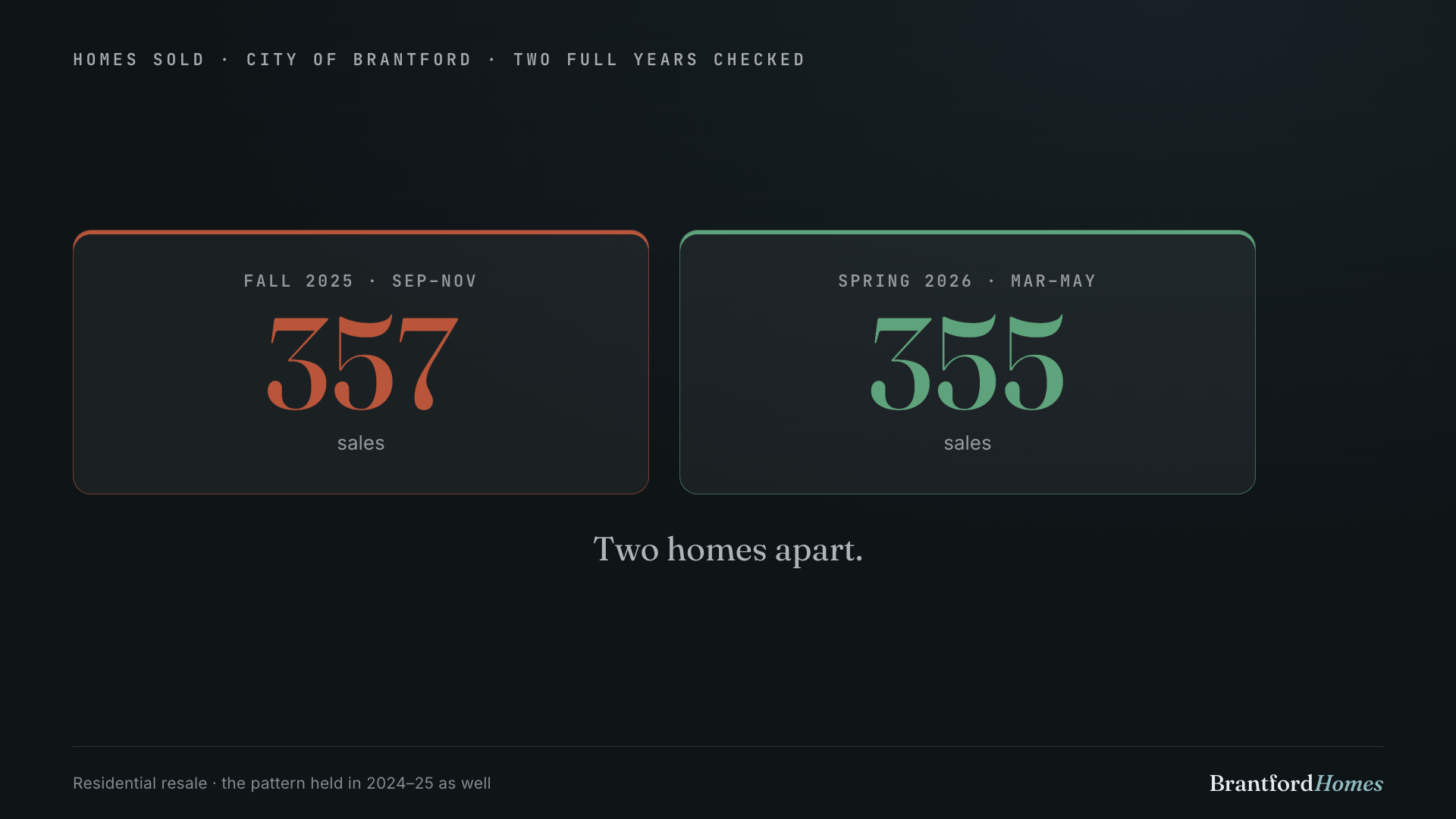
Fall didn't lose. It won — by two. Which is a tie, let's be honest. But that's the point: the season everyone treats as second-best kept pace with the season everyone waits for, two years in a row.
Buyers don't hibernate in October. I should have known — I meet them every week.
Who's actually looking in October
Think about who books a showing in the fall.
They've already sold, and they're on a clock. They've accepted a transfer. They've got kids and want to be settled. They missed out on a house in the spring and have been waiting all summer for another one like it.
They're not wandering through open houses for something to do.
Here's the funny part: I hear sellers say "we want to sell in the spring" all the time. I almost never hear a buyer say "I want to buy in the spring." Buyers buy when they're excited about a house, when it fits their life, or when something external has the clock ticking on them. I've never once had a serious buyer tell me they were waiting for the flowers to bloom.
The people looking in October usually need to move. And as a seller, I'll take three serious buyers over fifty tire kickers — every day.
The number that changed my mind
Then I looked at the other side: the competition.
In May, 329 new listings came on the market in Brantford. In November? About 200.
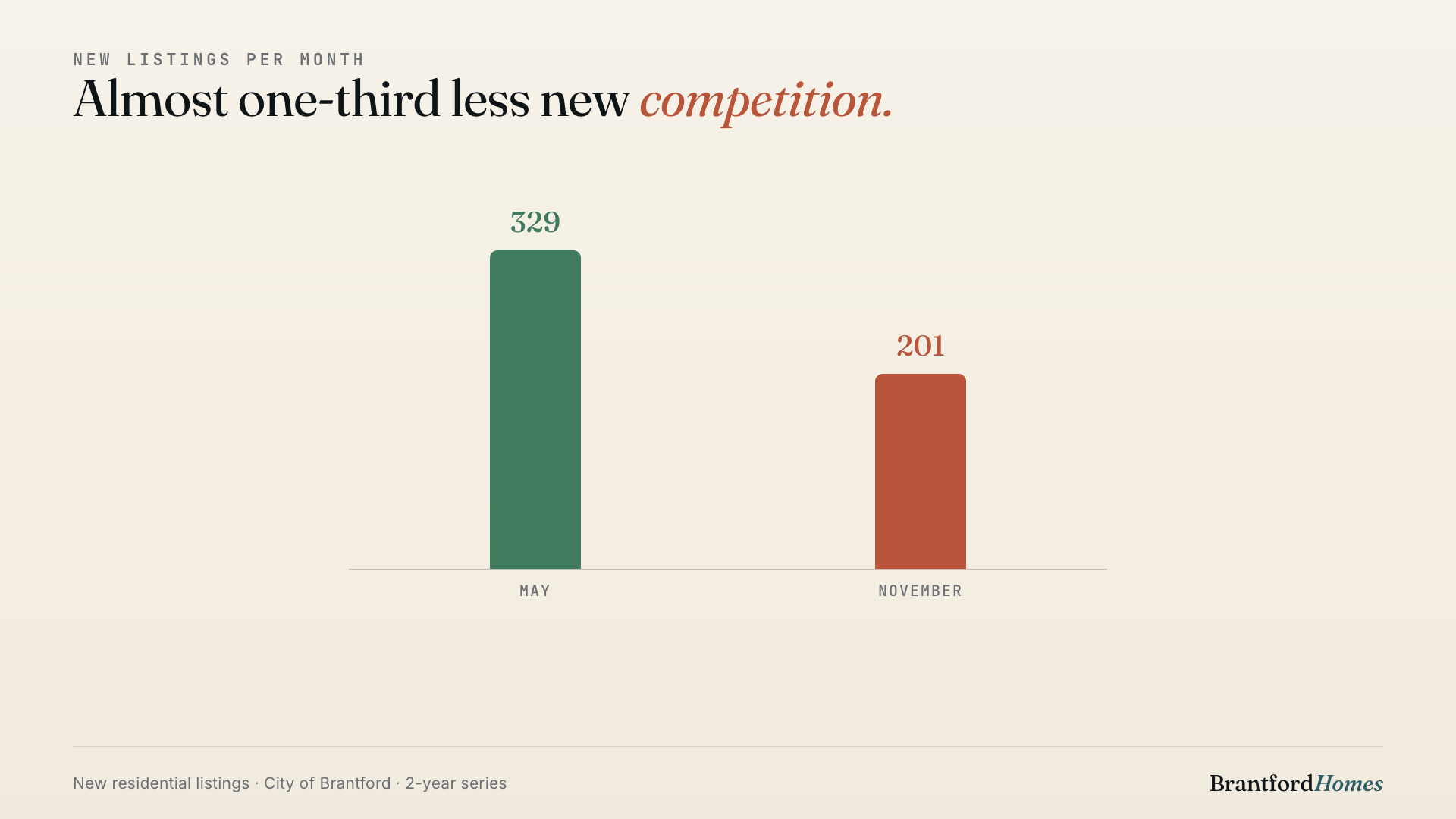
Think about what that means. List in late fall, and almost a third of your competition simply isn't there.
And competition is the whole game right now. Buyers today aren't really trying to find a house — they're trying to eliminate houses. Every listing beside yours is another comparison, another reason to cross yours off. List in spring and every seller who "waited for the market" shows up the same month you do. List in fall and you might be the only fresh house your buyer has seen in three weeks.
Less competition doesn't guarantee a sale. But it gives buyers fewer reasons to leave your listing. In this market, that's worth a lot.
To be fair to spring
Spring does win some things, and the honest read includes them.
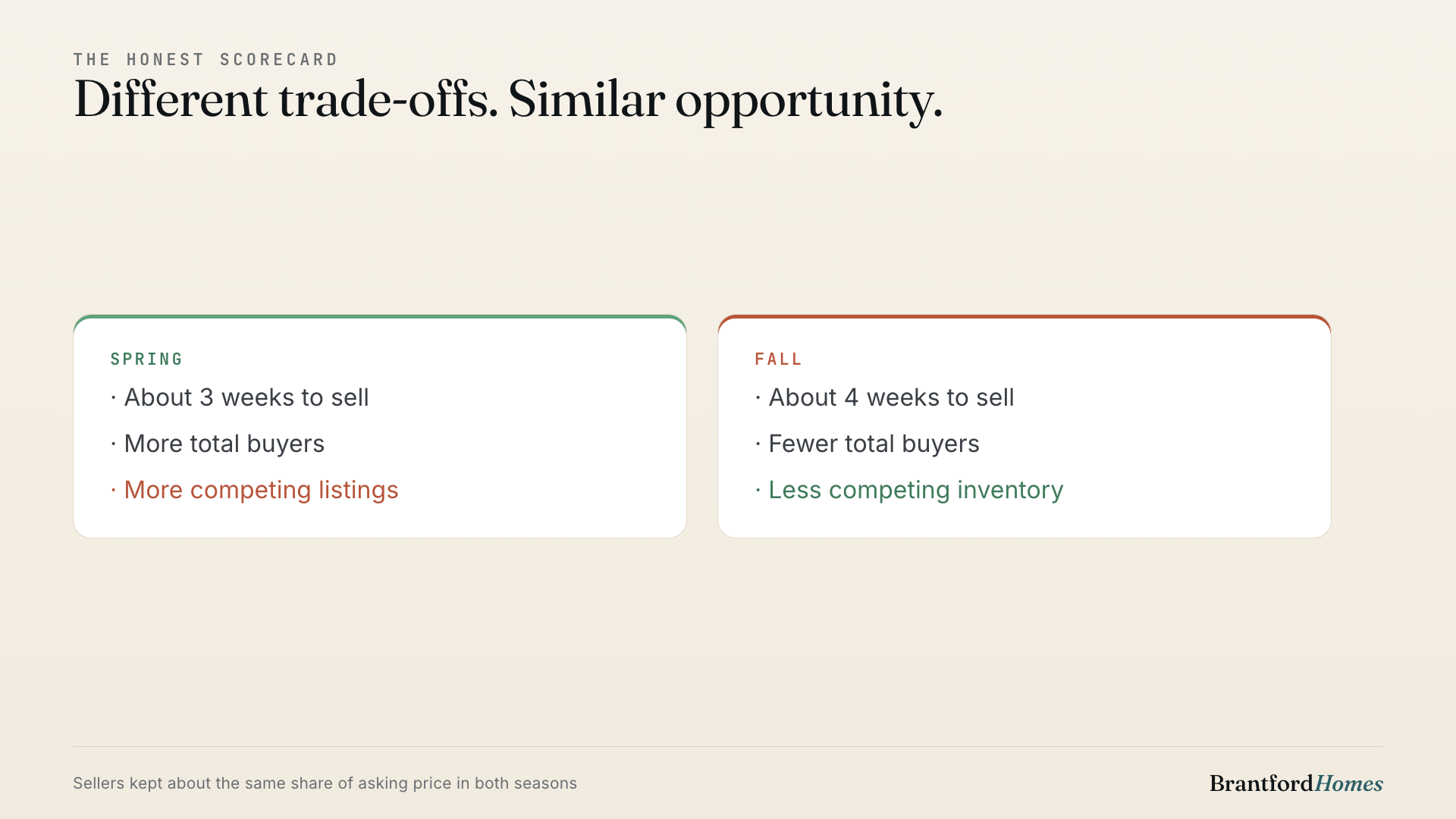
I'll give spring this — it's a little faster. A typical spring sale went firm in about three weeks this year; fall ran closer to four. Fall asks you for one extra week of patience.
And spring has the deepest pool of buyers of the year. If your home needs a big audience to find its one buyer — and in Brantford right now, that's especially condos — that depth genuinely matters.
But here's what spring doesn't win: price.
I went looking for the famous spring premium in two years of Brantford sales. It's not there. Monthly prices move around because of what sold that month — a big-home month reads high, a condo-heavy month reads low — but the same house doesn't dependably fetch more in April than it does in October. Sellers kept about the same share of their asking price in both seasons, within about 1.5–2% of asking either way.
The calendar doesn't buy houses. People do. Your price and your presentation set your number — the season just sets the weather in the photos.
The one time I'd wait
If there's one time I really don't love launching a listing, it's winter.
December through February, this market goes quiet. About 70 sales a month last winter — half the pace of fall or spring. The homes that did sell in January took a median of 50 days and gave up more against asking than any other month of the year.
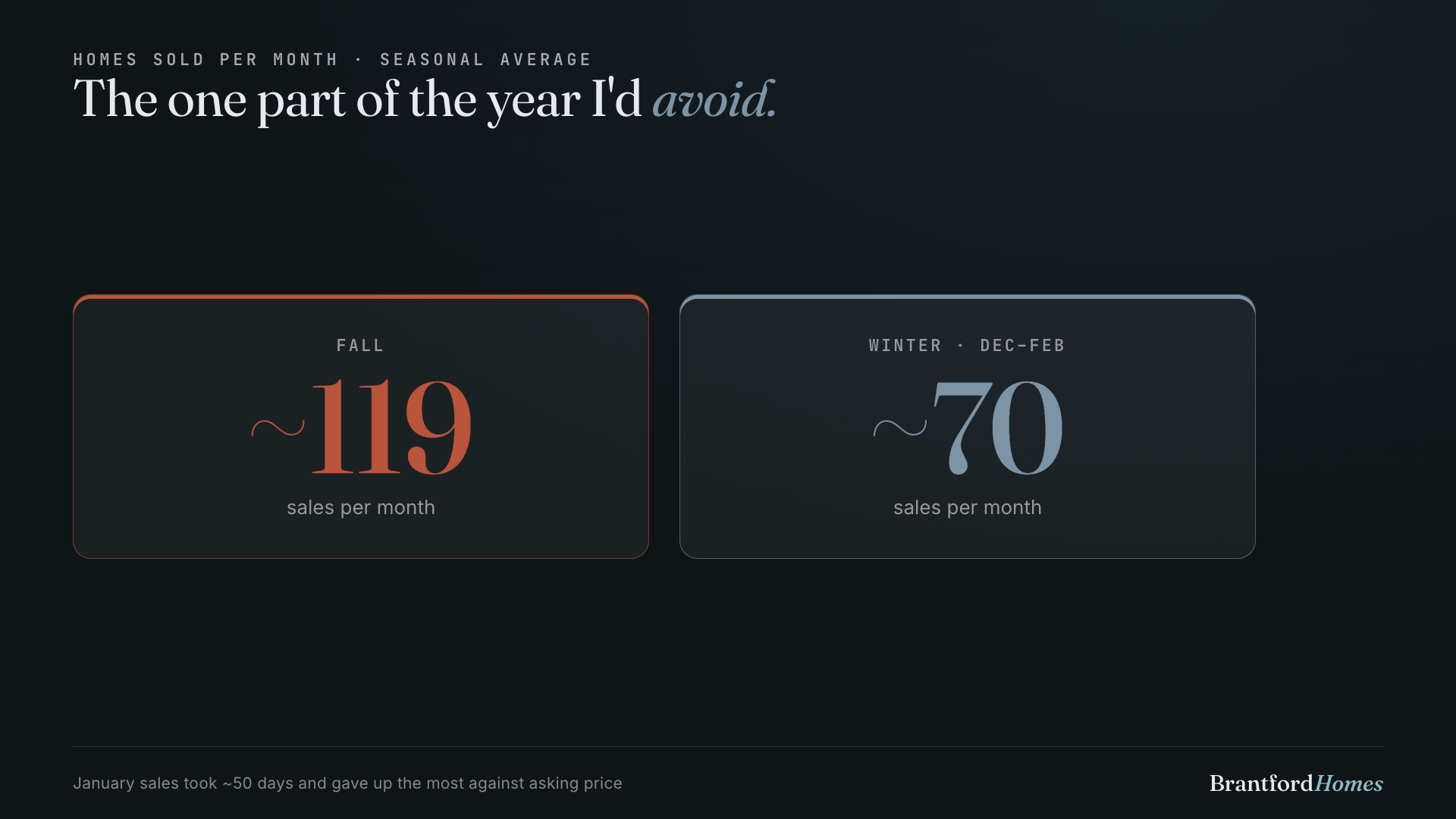
Here's why that matters for the fall question. A late-September listing gets the whole season. A mid-November listing is really a winter listing — and since the market tells you about your price in the first two or three weeks, if your listing needs an adjustment you want it landing in front of November's buyers, not January's.
The fall window is real. It just has a closing time.
The trade I like
One thing nobody talks about — and I actually think it's the biggest advantage of selling in the fall.
Most sellers are also buyers. You sell the house, you buy the next one. So a fall seller becomes a fall buyer.
You sell in the busier market, to those motivated, deadline buyers. Then you go shopping in November — when the sellers you're negotiating with are staring down the winter and already feeling their listing cooling off.
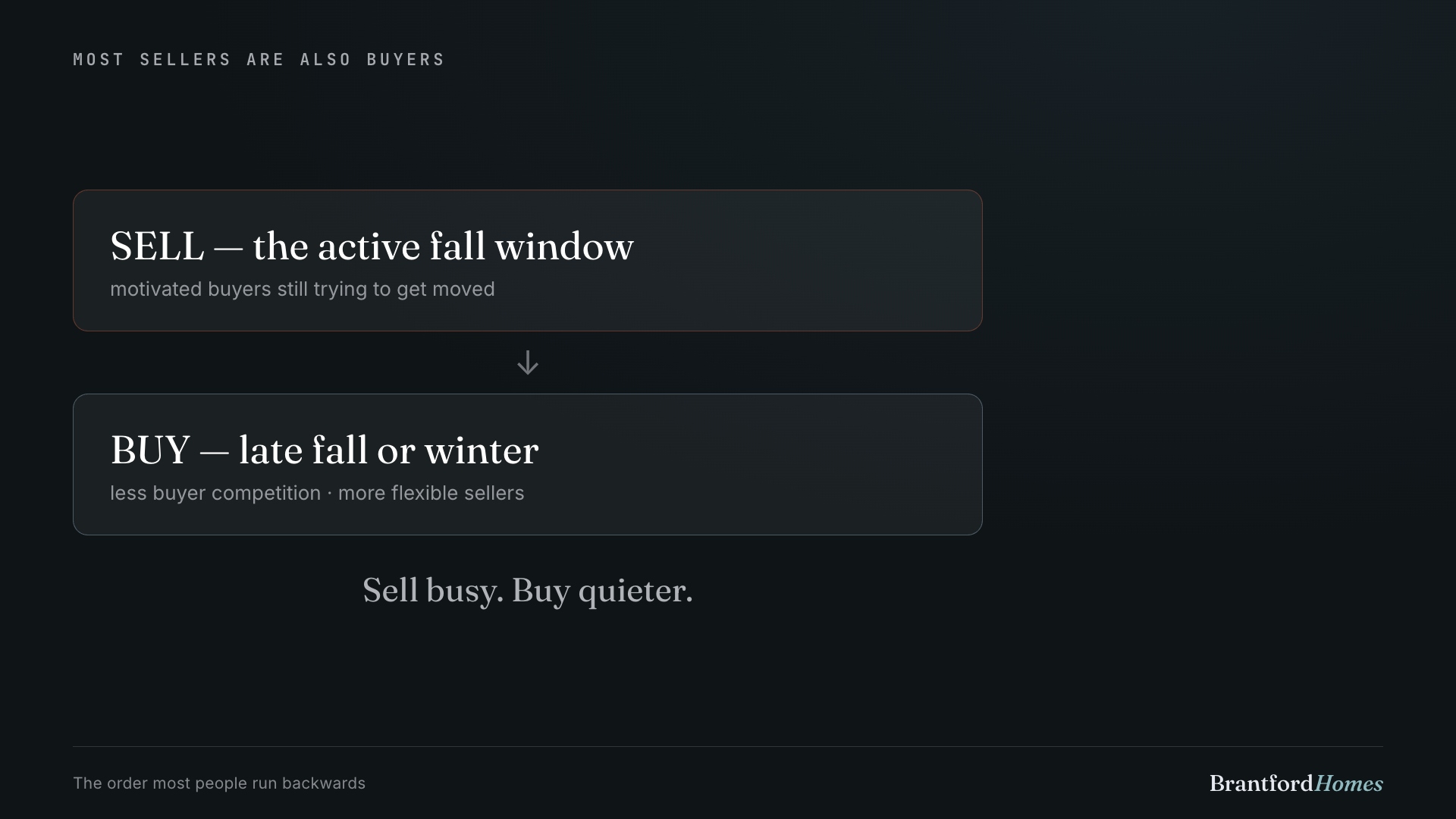
Sell busy. Buy quiet. It's not often you get to win on both sides of the same transaction. I like that trade.
And if the plan is "wait for prices to recover" — the typical home here sold for about 4% less this spring than a year earlier. I'm not predicting next spring; nobody honest will. But if you're buying again locally, whatever the market does over the winter, it does to the house you're buying too. Both homes move together. Waiting mostly just moves the whole conversation eight months down the road.
Who should actually wait
Spring is still the right call for some people. Honestly:
- Your house needs the runway. Not a renovation — the paint, the decluttering, the small repairs that take it from tired to sharp. If that honestly runs past early October, don't rush it. Use the winter and arrive in March ready. Putting a desirable product on the market matters more than ever right now.
- You'd be listing in November or December anyway. That's not a fall listing, that's a winter one. Wait.
- You're in one of the tougher segments. Apartment condos, three-storey townhomes, million-dollar properties — these parts of the Brantford market aren't behaving like the averages. Before making a timing call in one of them, look at whether your segment has buyer activity happening right now. Spring's deeper buyer pool matters most here.
Notice what those situations have in common: the decision doesn't come down to the calendar. It comes down to when the home will be ready and when you need the move to happen.
Why I built the tools for this
Honestly, this question is one of the reasons I built BrantfordHomes.com. I was tired of guessing at this stuff — or spending hours toiling over MLS data to see it clearly. I wanted sold prices, real-time market conditions, and a straight view of what's for sale, who's winning, and who's losing. I built it for myself first; it's free for you now.
If I were thinking about a move right now, I'd start with the free home evaluation — real data from your own neighbourhood, not an AI estimate. Then the monthly market report, where the data breaks down to the neighbourhood, the style of home, and the price range. And one of the newest things we track in this slower market is what happens to every listing that doesn't sell — when it comes back on, what strategy changed, and whether it worked. Spend a little time learning your market and watching your competition, and you're already ahead of the game when decision time comes.
See what homes actually sold for.
Register free for Insider access — sold prices the portals don't show, new listings before everyone else, and my honest monthly read on the Brantford market. No spam, unsubscribe anytime.
Frequently asked
Is fall a good time to sell a house in Brantford? Yes — and the data is blunt about it. Fall 2025 produced 357 sales in the City of Brantford versus 355 this spring, with sellers keeping about the same share of asking price. Fall buyers skew serious — relocations, families who missed spring, buyers whose homes just sold — and you face about a third less competition than a May listing does.
Do homes sell for more in the spring? Not reliably, in Brantford's last two years of data. Monthly medians move with the mix of homes sold, not the season — there's no dependable pattern of the same home fetching more in April than October. Spring sales do go firm about a week faster. Price and presentation set your number; the season mostly sets your timeline.
When should I list my house in the fall? Between Labour Day and the first week of October, ideally. That gives you the full fall window: your critical first three weeks land in-season, and if you need a price adjustment it still catches November's buyers. Take photos in late August while the property looks its best. Listing after Halloween means selling into a thinning market.
When is the worst time to sell a house in Brantford? December through February. Sales fell to about 70 a month last winter — half the fall and spring pace — and January's sales took a median of 50 days with the softest negotiating outcomes of the year. If you miss the fall window, waiting for late February or March usually beats launching into the quiet.
Should I wait until spring 2027 to sell my Brantford home? Waiting is a bet that the market improves by more than your carrying costs — and over the past year, the typical price drifted about 4% lower, so that bet lost. Nobody can promise what next spring brings. If you're buying again locally, the market you're waiting to sell into is the same one you'll buy into, so waiting rarely nets ahead. Wait for your home's readiness, not for the market.