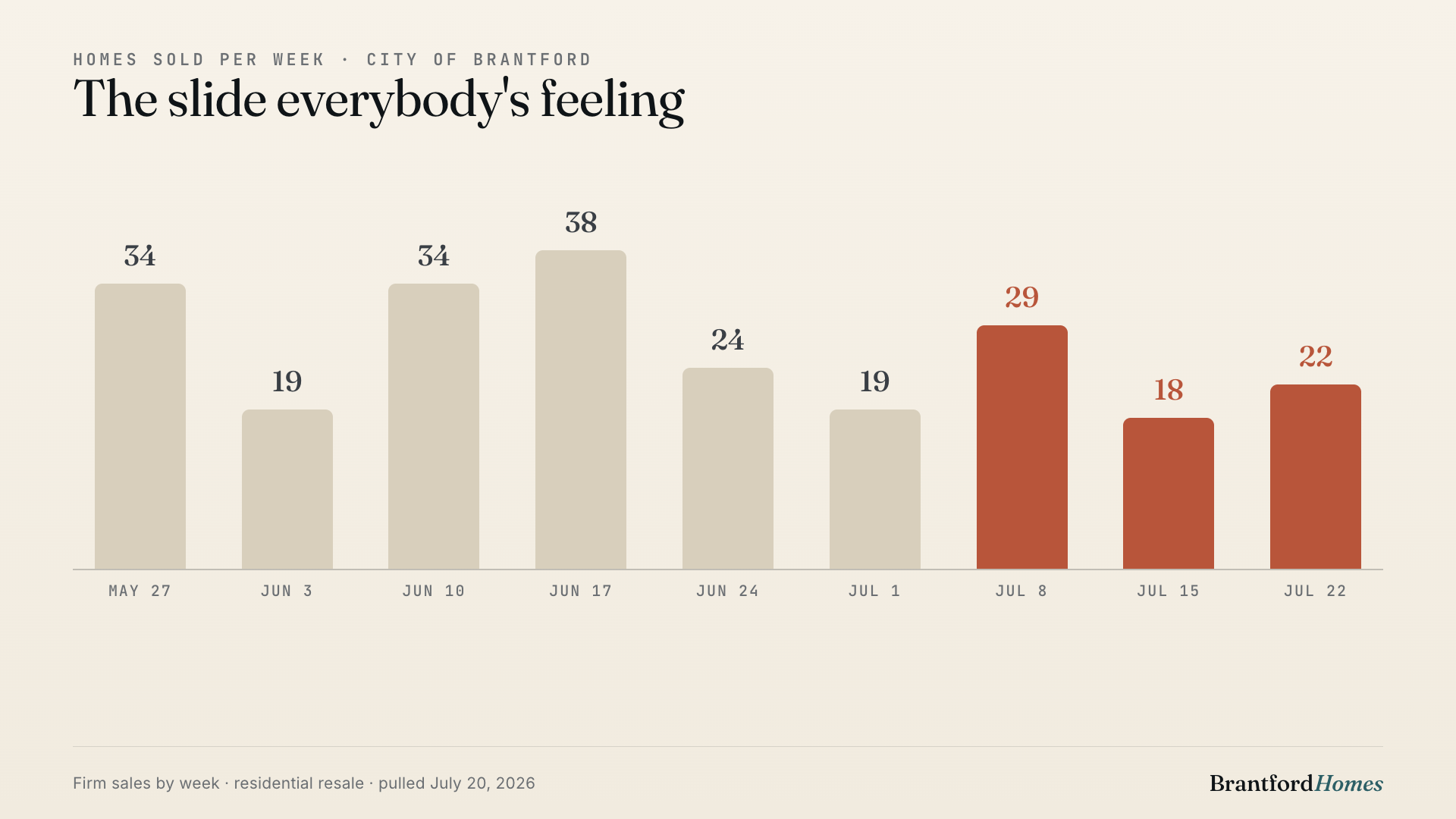
Four weeks ago, Brantford was selling about thirty homes a week. Last week it was twenty-two — nearly a twenty-five percent drop in one month. I went into the data expecting a market rolling over. That's not what I found.
The last few weeks felt quiet. Showings slower, open houses emptier, other agents saying their phones weren't ringing. The numbers back the feeling up. So — is this the start of the slide everyone keeps predicting? I pulled every sale in the city from the last four weeks, and every sale from the same four weeks last year, to find out.
First, the honest check
Before calling anything a crash, I laid last July on top of this July. Honestly, I expected this year to look much worse.
It doesn't. The two years are almost on top of each other. Sales always slide here after the spring rush — families who wanted to move before September are mostly done, and everybody heads on vacation. The weekly drop is mostly just July doing what July does.
I almost stopped there. Then I noticed something I wasn't expecting.
Inventory is moving the wrong way
Every year, the count of homes for sale builds through spring, peaks around June, and starts coming back down. Except this year it's still climbing. There are almost 600 homes for sale in Brantford right now — the highest we've seen all year.
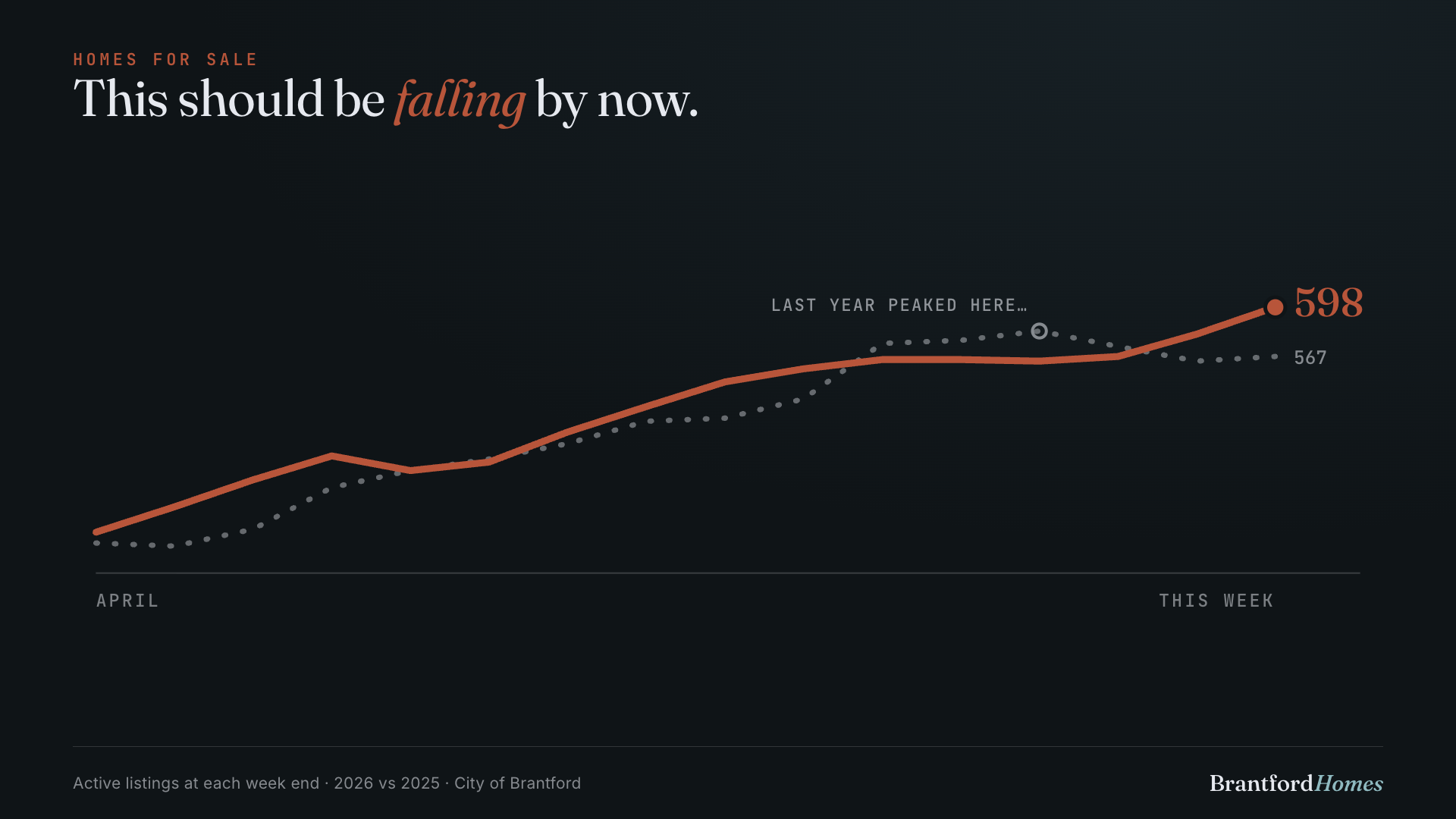
And here's the strange part: it isn't because sellers are flooding in. New listings have actually slowed down. Inventory is growing because homes are being listed... and taking longer to sell.
Which raises the question I actually wanted answered: which homes?
The pile-up is at the bottom — but it's really two stories
If your home is worth more than about $800,000, there are actually fewer homes competing with you than last summer. The big increase is under $500,000 — that segment has almost fifty percent more homes for sale than a year ago.
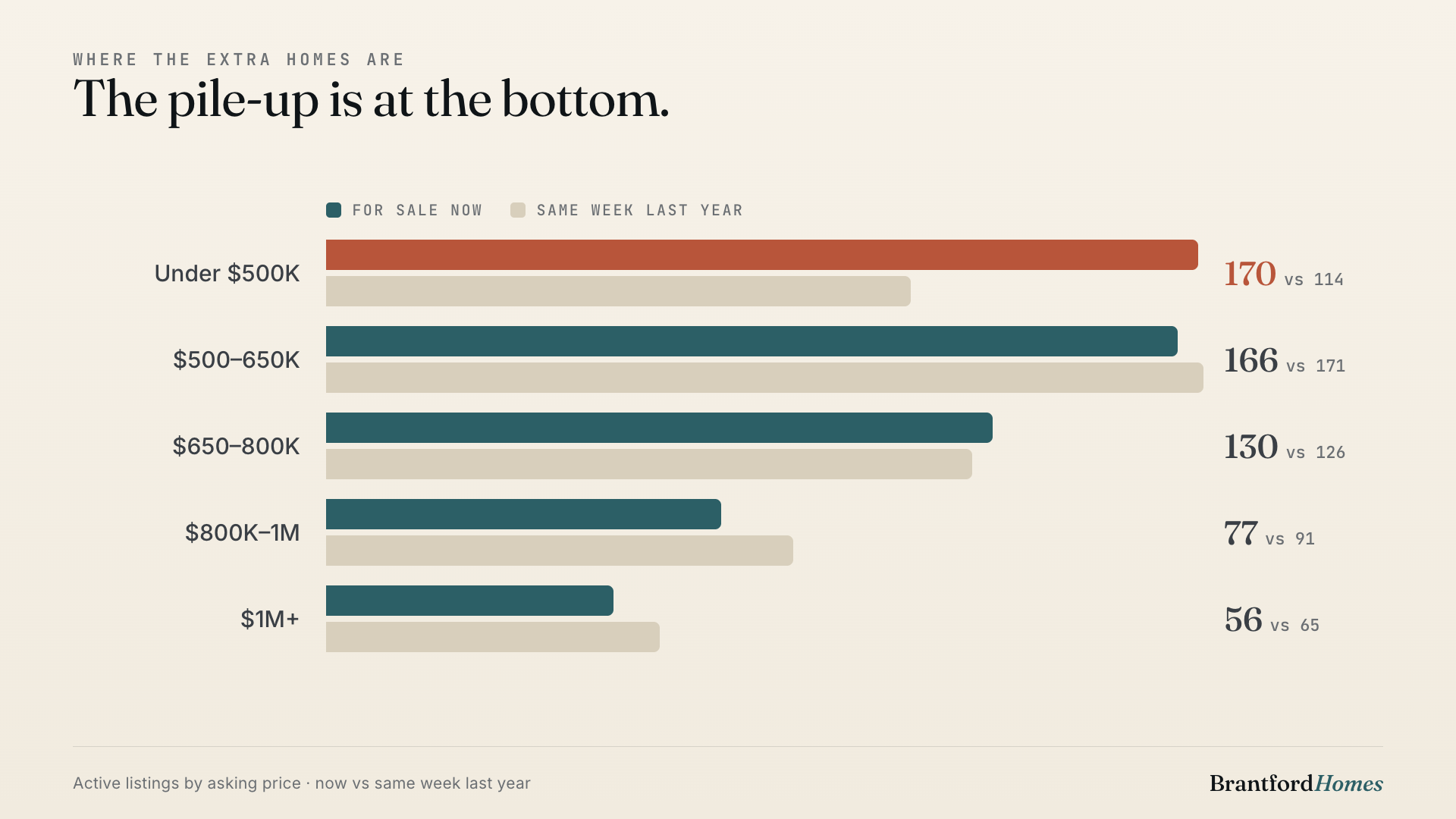
But "under $500K" is really two completely different markets.
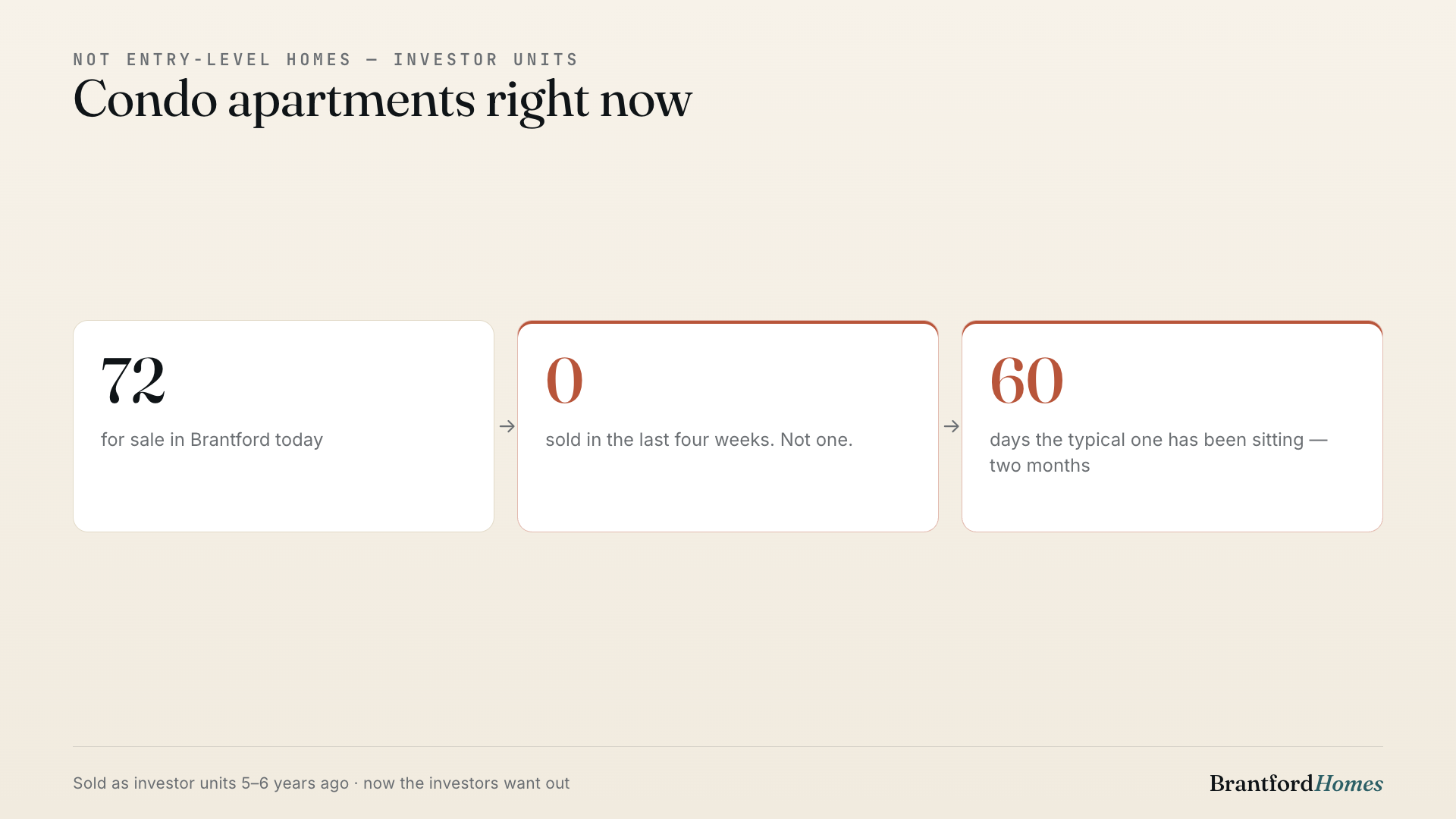
Condo apartments. There are 72 of them for sale right now. In the last four weeks, the number sold was zero. Not a typo — not a single one, and the typical unit has been sitting for more than two months. When you think about how many of these were originally sold, it makes sense: five or six years ago, rates were low, investors were buying, and prices were climbing. Today the math is completely different. A lot of those owners would like out — and there just aren't enough buyers looking for that product right now.
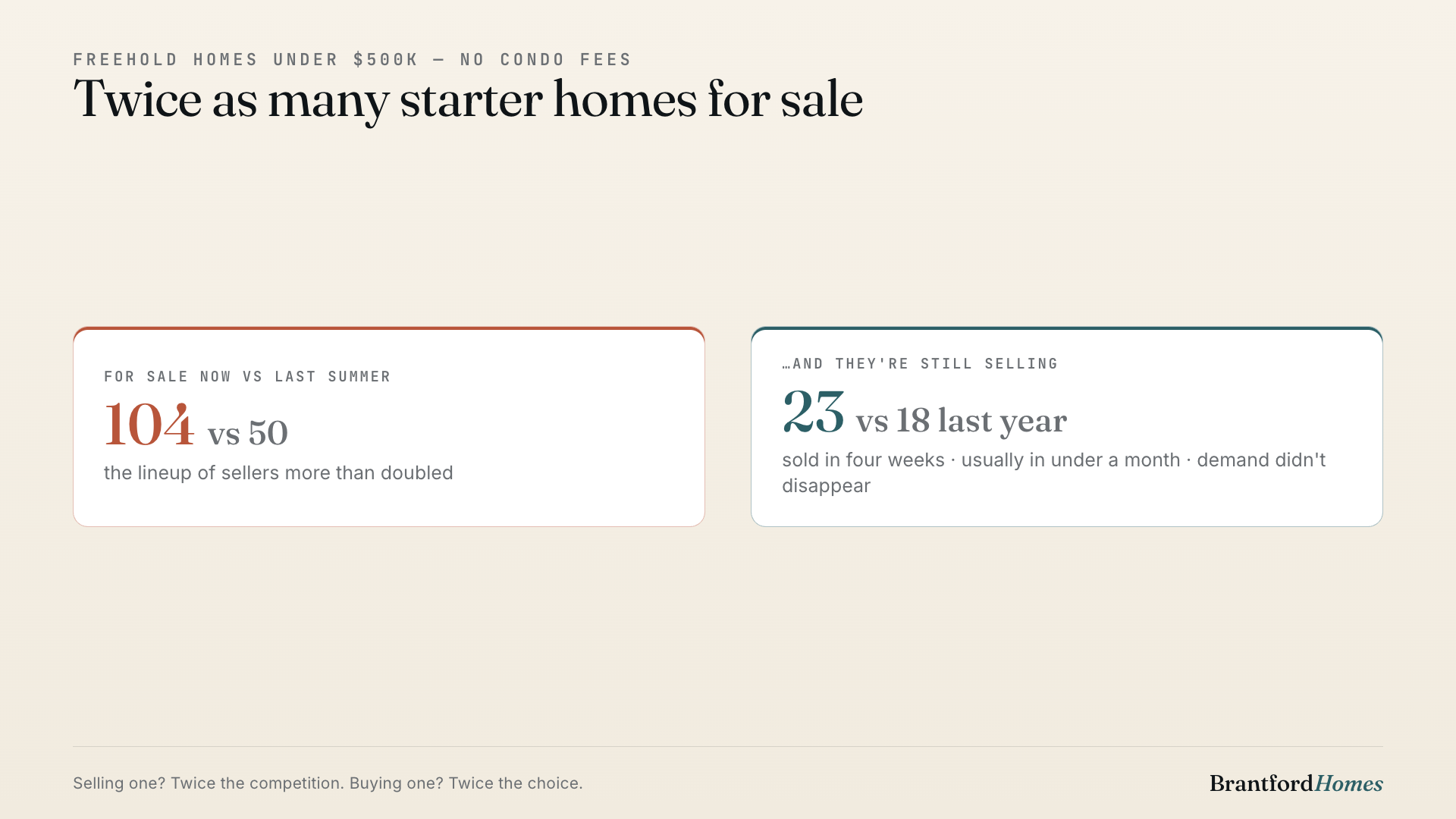
Freehold starter homes. Last summer there were 50 for sale under $500K. Today there are 104 — more than double. At first I thought that meant buyers disappeared. They haven't: these homes are still selling at the same pace as last year, usually in under a month. Demand didn't vanish. The number of sellers doubled. If you're buying your first home, you have twice the options; if you're selling one, you have twice the competition. Same price range, two very different experiences.
The move-up market: fewer buyers, faster sales
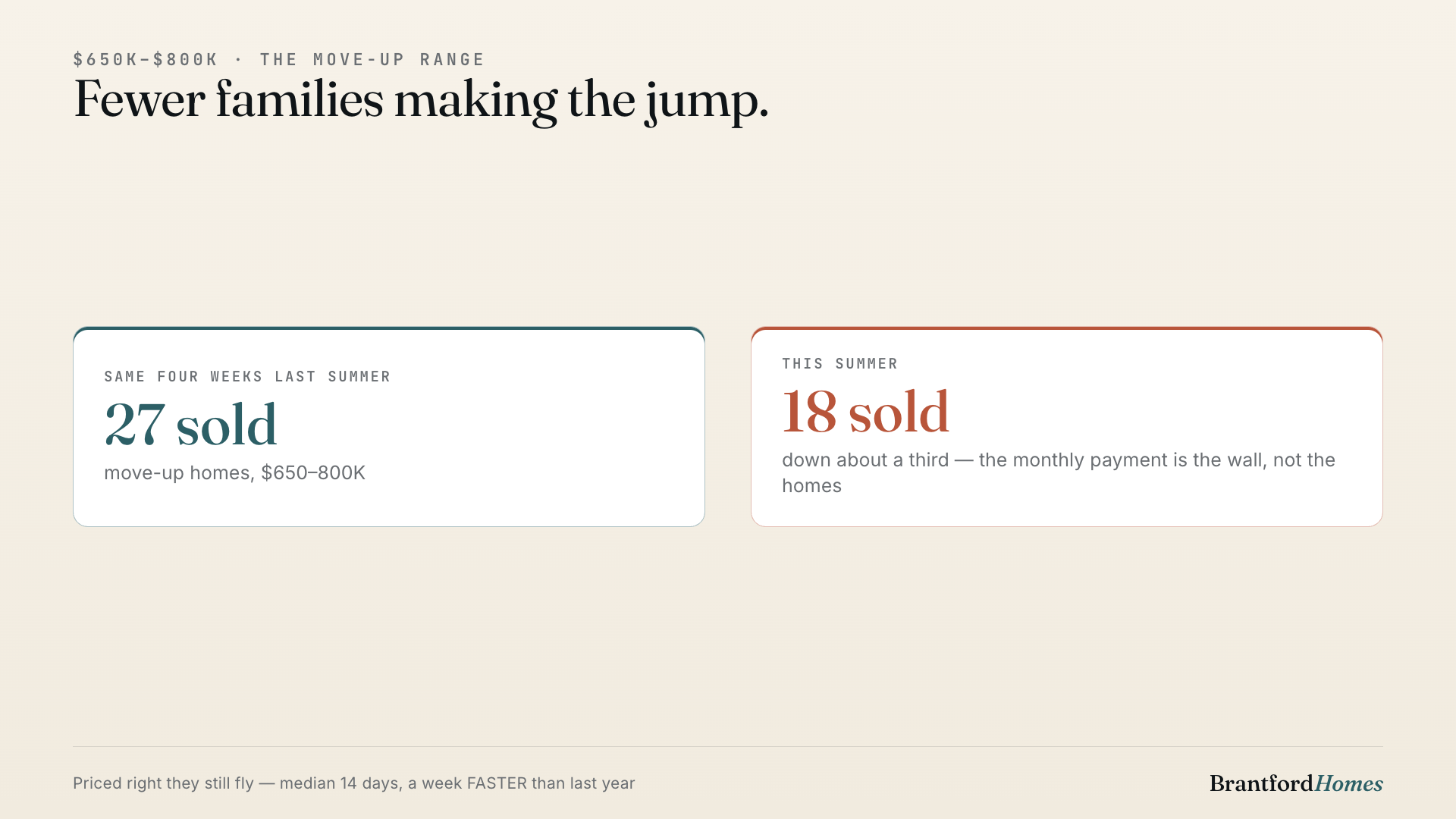
One bracket up — $650,000 to $800,000, the classic move-up range — sales are down about a third from last summer. I don't think that's condos gumming up a chain. It's simpler: moving from your current house to the next one costs a lot more per month than it did a few years ago, so fewer families are making the jump.
But here's the encouraging part: the homes that are priced properly are selling in about fourteen days — actually faster than last year. The buyers who are still shopping are decisive. There are just fewer of them.
It didn't stall. It jammed.
So after all that digging: I don't think the Brantford market stalled. I think parts of it jammed. There's a pile-up at the bottom of the ladder, fewer people climbing into the next house — and well-priced homes still moving right through it. That's a very different story than a crash.
What I'd do about it
If I owned a condo and needed to sell — I'd make mine the obvious choice in the building. Squeezing out another $5,000 price reduction every few weeks isn't working. And if I could afford to hold and rent it instead, I'd look hard at that option.
If I was selling a starter home — I'd remember there are twice as many neighbours competing with me as last year, and price to win immediately, not to test the market.
If I was selling in the move-up range — I'd actually feel pretty good. The buyers who are shopping decide quickly. I'd just make sure every offer I take seriously has a buyer whose own house is likely to sell — because today, their sale affects yours.
If you're a first-time buyer — this is probably the best selection you've had in two years. Roughly 170 homes under $500,000, more choice, less competition, and more sellers willing to negotiate. I haven't been able to say that for a while.
The question that actually matters
This is exactly why I built BrantfordHomes.com. City averages only tell part of the story — a condo owner and someone selling a $700,000 detached home are living in two completely different markets right now. One free login gets you every sold price in the city and market reports broken down by price range and property type, so you're looking at your market, not the average.
The headline isn't that Brantford stalled. It's that different parts of the market are behaving very differently. The important question isn't "how's the market?" It's "how's my market?" If you'd like to know where your home fits into all of this, reach out anytime — I'm happy to sit down, look at the numbers together, and help you build a plan.